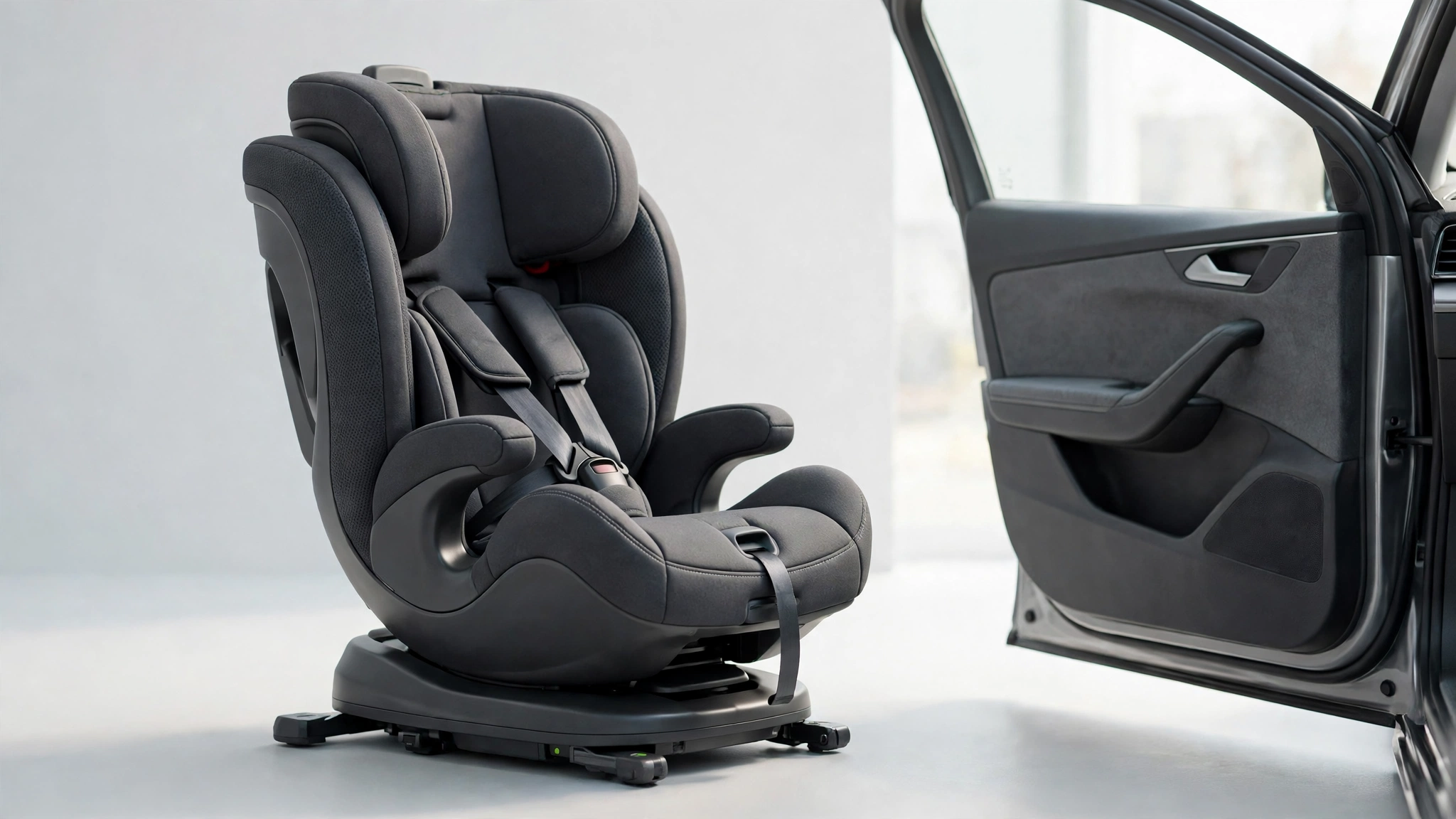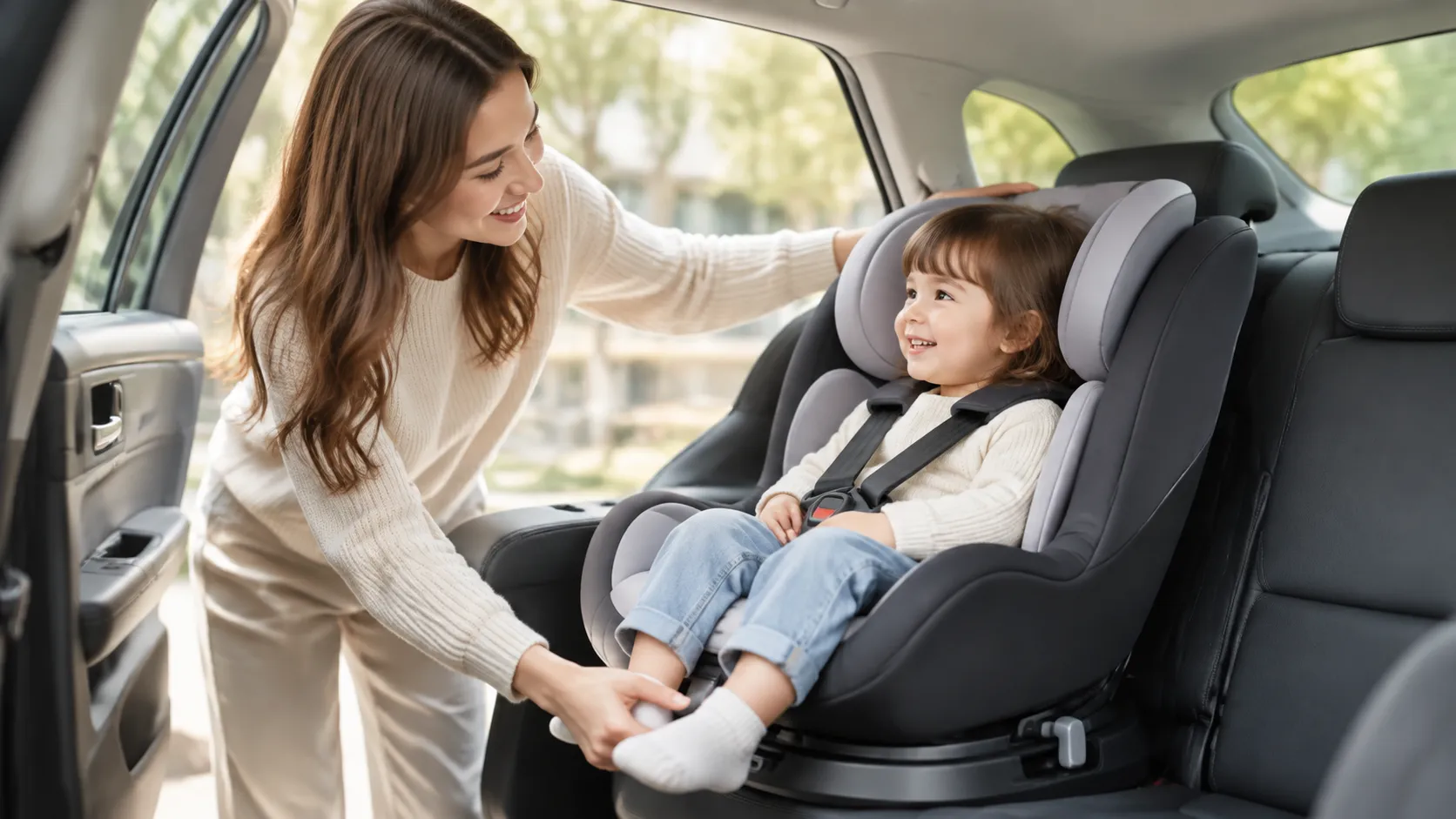
A 360 rotating car seat turns toward the car door for loading, then locks into rear-facing or forward-facing travel positions. For retailers and distributors, the buying decision is less about the swivel itself than about cabin fit, certification, and correct use. This guide works through all three, using Holdum’s rotating platforms as the working example.
What This 360 Rotating Car Seat Guide Covers
This guide covers how 360 rotation works, how to check cabin fit and certification before ordering, and how to source rotating platforms from Holdum. It is written for retailers, distributors, and brand owners buying in volume.
Turning the seat toward the door means less bending and twisting when you lift a child in, and faster harness buckling. It also makes rear-facing easier to live with day to day — though how long a child can stay rear-facing still depends on the seat's height and weight limits, not on rotation.
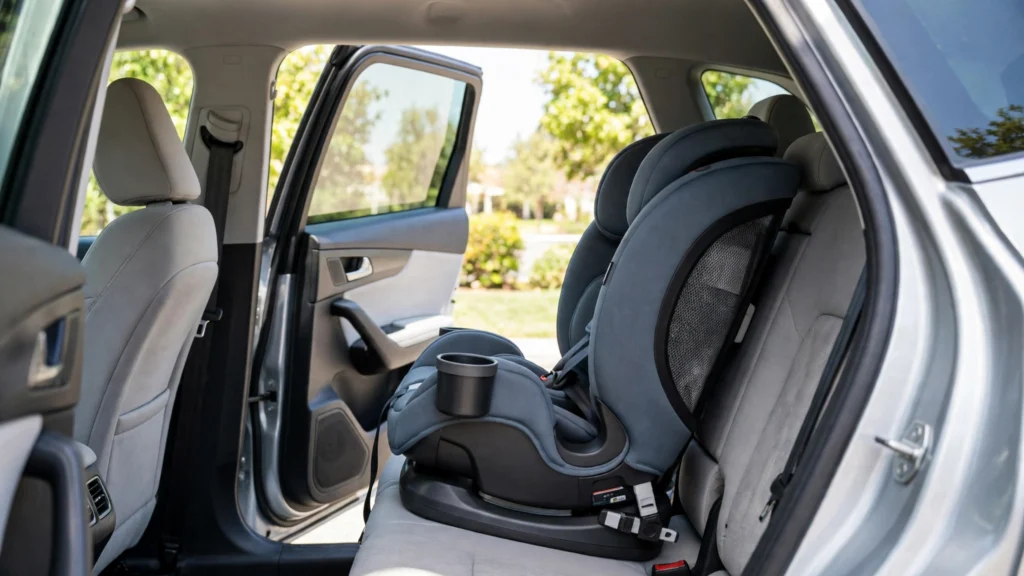
Editor’s note — field practice: In OEM and private-label programs, many “rotation” complaints that reach factories are not turntable failures. They are cabin-fit returns (shell depth hitting the front seat or B-pillar), boarding-position lock-outs left unlocked for travel, or missing homologation dossiers at customs. Buyers who demand ISOFIX + anti-rotation evidence, clear lock indicators, and stage-coverage sheets before sampling avoid most of those cycles. — Mr. Liam Xie, Holdum
About the Author — Mr. Liam Xie, Holdum
Child car seat structural engineer. Nearly 20 years in the industry, 100+ models developed, former R&D Director at several of China's leading child safety seat manufacturers. Products he developed were sold in Europe, Southeast Asia, Australia and the US.
Who This Guide Helps: Retailers, Distributors, and Brand Owners
This guide is written for B2B decision-makers:
- Retailers & E-Commerce Merchants: Identify high-demand rotation mechanisms (full 360-degree vs. 180-degree turn) and features that reduce return rates, such as clear belt paths and intuitive harness adjustments.
- Global Distributors: Evaluate shell dimensions, vehicle clearance, and installation footprints across compact cars to full-size SUVs.
- Brand Owners & Product Managers: Source reliable rotational platforms—base architecture, anti-rebound systems, and coverage from rear-facing infant stages through forward-facing booster modes.
How to Choose 360 Rotating Car Seats for Your Lineup
Selecting the right swivel models means balancing ergonomics, footprint, and market demand. As Holdum, an OEM/ODM manufacturer of 360 rotating child car seats, we design platforms that reduce back strain during buckle-up and make extended rear-facing easier day to day.
When you curate a catalog, check how each model fits vehicle classes, age brackets, and shell clearance. Usability research on rotating convertibles is still emerging, but the inspection data in the ISOFIX section below points the same way.
Treat rotation as a misuse-reduction feature, not only a comfort upsell.
Rotation Use Cases and Cabin Fit
Rotation mechanisms generally fall into two categories: full 360-degree rotation and 90-to-180-degree door-facing swivels. Cabin constraints drive return rates. The checks below come from retail return patterns and fit checks:
- Doorway Clearance: Full 360-degree swivels let parents face the child toward the open door for loading, then lock into rear-facing or forward-facing travel modes.
- Compact Car Geometry: In subcompact or compact vehicles, front-to-back shell depth matters. A compact footprint protects front-passenger legroom and keeps the shell clear of door pillars while rotating.
- Rotation Across Recline Angles: Models that rotate smoothly across multiple recline angles are less likely to jam mid-rotation, which reduces user frustration; incorrect recline is a recurring installation error in field studies of child restraints.
- Boarding Lock-Out: A mechanical interlock must prevent travel use while the seat is in its 90° boarding position. Spec sheets should show how the interlock works and how caregivers get a clear locked/unlocked cue.
Rotating Infant vs Convertible vs 3-in-1 Paths
Lineup planning starts with which development path fits your market tier:
- Modular Infant Carriers: paired with an independent rotating base, a dedicated rotating infant car seat combines carrier portability with dock-and-swivel loading — the natural fit for travel-system buyers.
- Convertible Swivel Seats: A rotating convertible car seat covers infancy through early childhood, moving from extended rear-facing to forward-facing without uninstalling the base. This is the path where rotation most helps correct use — in rear-facing mode.
- All-in-One / 3-in-1 Swivel Systems: A 3-in-1 rotating car seat converts from a rear-facing harness to a forward-facing harness and then to a high-back booster, so one seat covers more years.
| Feature Category | Rotating Infant Seat | Rotating Convertible | Rotating 3-in-1 / All-in-One |
|---|---|---|---|
| Typical Target Age | Birth to ~12–15 months for the carrier (MY-566) | Birth to ~4 Years | Birth to ~10–12 Years |
| Primary Base Setup | Stay-in-car base + carrier | Integrated rotating base | Heavy-duty integrated base |
| Rotation Scope | Door-facing (90°–180°) | Full 360° rotation | Full 360° through booster stage |
| Retail Positioning | High convenience / travel system | Strongest correct-use signal in rear-facing mode | Maximum value & single-seat longevity |
Note: MY-166 is listed under the Rotating infant path in the model table below, but it is a multi-stage platform covering 40–150 cm. The carrier ages above refer to the infant carrier (MY-566).
Holdum 360 Rotating Platforms: Models, Specs, and 40HQ Loads
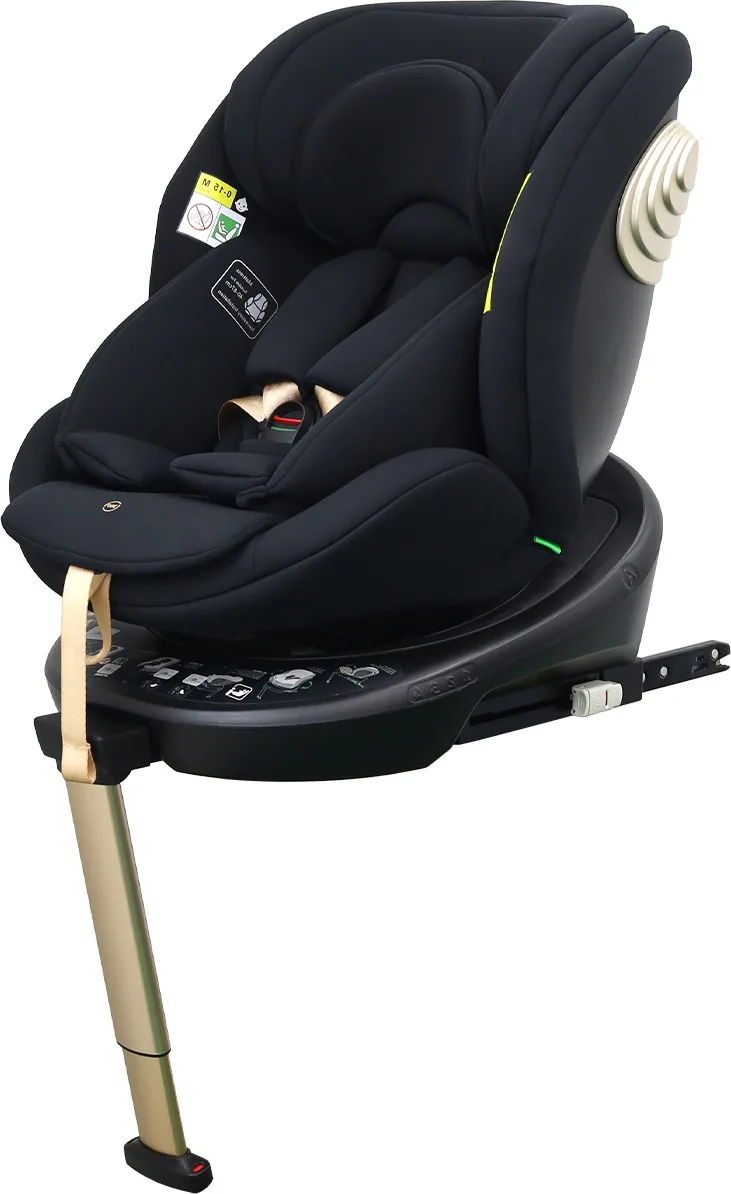
Three rotation paths, five Holdum platforms. Use the table below to match a model to your market before requesting spec sheets—40HQ loads in the table come from our 2026H2 quotation.
| Path | Model | Certification | Stature | 40HQ Load |
|---|---|---|---|---|
| Rotating infant | MY-166 | ECE R129/04 | 40–150 cm | 470 units (square box) / 550 units (L-shaped box) |
| Rotating convertible | MY-266 | ECE R129 | 40–150 cm | On quotation |
| 3-in-1 rotating | BS-188 | ECE R129/03 | 40–150 cm | 540 units (single pack) / 604 units (2-pack) |
| Infant carrier | MY-566 | ECE R129/04 | 40–87 cm | 710 units (single pack) / 1,020 units (4-pack) |
| All-in-one | BS-288 | ECE R129/03 | 40–150 cm | 540 units (single pack) / 604 units (2-pack) |
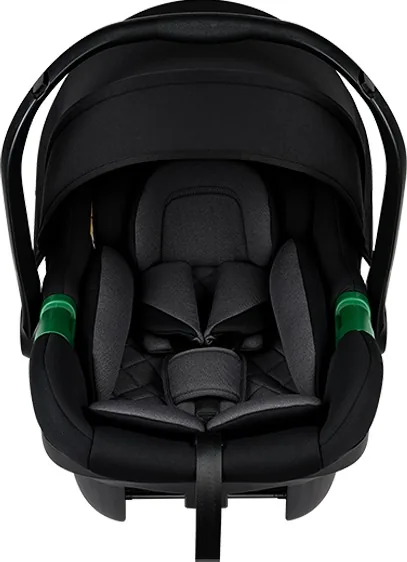
MOQ is 1×40HQ per model. Colors and deep customization are confirmed at quotation. Holdum production batches include rotation-cycle checks before shipment; see our quality control process and wholesale container planning for 40HQ loads. For MOQ and sampling, see our FAQ.
Weight, Stature, and Stage Coverage Checklist
Before locking manufacturing specs, check stage boundaries against regional buyer expectations and pediatric guidance on rear-facing duration:
- Rear-Facing Longevity (Extended Rear-Facing Buying Rationale): The American Academy of Pediatrics advises that infants and toddlers ride rear-facing as long as possible until they reach the highest weight or height allowed by the seat’s manufacturer—not a hard “until age 2” cutoff. Confirm the shell depth and harness range support rear-facing use up to the seat’s approved limits — many modern convertibles are approved rear-facing to about 105 cm or 18 kg.
- Forward-Facing Transition: Look for no-rethread harness-height adjustment, so the harness can be raised as the child grows without uninstalling the seat or rethreading straps.
- Booster Capabilities: On all-in-one platforms, verify the harness stows cleanly when switching to the vehicle belt guide path.
Safety and Compliance Checks Before You Source
For retail or distribution, certification is the entry gate. Put homologation, mechanical integrity, and anti-rotation lock security first — missing homologation dossiers can stop customs clearance, while weak swivel hardware or incomplete ISOFIX load paths fail testing and damage brand trust. For the detailed retailer safety checklist, see Are 360 Rotating Car Seats Safe? A Retailer’s Checklist.
ECE R129 / i-Size Basics for Buyers
For markets following UN rules, compliant i-Size ECE R129 car seats are the default path. Unlike the older weight-based ECE R44, R129 is height-based, requires side-impact testing, and requires ISOFIX installation with a support leg or top tether for integral i-Size car seats.
- ISOFIX + Anti-Rotation (integral i-Size): An integral i-Size CRS is designed to use two ISOFIX lower anchorages plus an anti-rotation device. That anti-rotation role is filled by a support leg or a top tether—not by the vehicle seatback itself. When you review drawings, confirm which device is type-approved with the rotating shell.
- Why Rotating Seats Usually Prefer a Support Leg: A top tether strap routed over or around a rotating shell can foul the turntable, limit travel modes, or require disconnect/reconnect at every rotation. Market practice for 360 platforms is therefore an adjustable support leg with clear floor-contact indicators (green/red and, where fitted, audible cues). Treat “leg preferred on rotators” as engineering practice aligned with R129’s anti-rotation requirement—not as a substitute for reading the approval.
- Mandatory Rear-Facing Floor: Height-based / R129 seats must keep children rear-facing until over 15 months (commonly referenced with a 76 cm band). UK consumer rules state height-based seats must be rear-facing until the child is over 15 months; many modern 360 platforms extend coverage toward 105 cm when approved.
- Q-Dummy Testing and Side-Impact Protection: crash tests use Q-series child dummies, built to mimic a real child’s body; built-in or deployable side-impact protection helps keep crash energy away from the child’s head and neck.
| Standard Feature | ECE R44/04 (Legacy) | ECE R129 / i-Size (Current Standard) |
|---|---|---|
| Classification | Child Weight (kg) | Child Stature / Height (cm) |
| Side-Impact Test | Not mandatory | Mandatory dynamic lateral testing |
| Minimum Rear-Facing | 9 kg (approx. 9 months) | 15 months / 76 cm minimum (rear-facing until over 15 months on height-based seats) |
| Installation Anchor | Seat belt or ISOFIX | Mandatory ISOFIX for integral i-Size seats, plus anti-rotation (support leg or top tether) |
ISOFIX, Support Leg, and Installation Risk Points
In a crash, a rotating seat transfers load to the vehicle anchors through the turntable. When specifying an ISOFIX seat, check the full load path from shell to chassis.
National U.S. observation work (NHTSA’s National Child Restraint Use Special Study) estimated that about 46% of car seats and boosters had at least one safety-relevant misuse—loose installation and incorrect recline among the recurring patterns. That is why buyers should treat clear ISOFIX cues, rigid floor contact, and travel-mode lock-outs as commercial risk controls, not optional gadgets.
- Support Leg vs. Top Tether: Prefer an adjustable support leg with unambiguous floor-contact indicators. Confirm the tether path (if any) does not block rotation or require daily disconnection.
- Turntable Play (looseness): check bearing and gear-track tolerance — excess lateral wobble in the locked position weakens the seat under crash loads.
- ISOFIX Arm Reach: Bulky bases with low ISOFIX arms can lift the vehicle cushion or fail to reach deep recessed anchors.
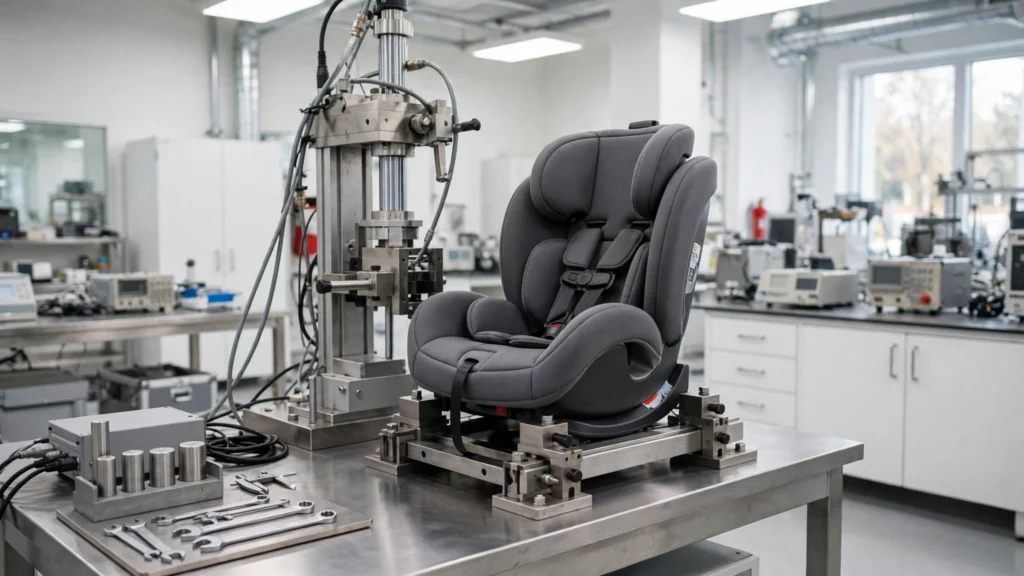
- Rotating Convertible Correct-Use Signal: a 2025 Traffic Injury Prevention analysis of National Digital Car Seat Check Form inspections (752 records, 48 U.S. states) found children in a rear-facing rotating convertible had higher adjusted odds of correct harness use (aOR 1.4), correct recline (aOR 2.6), and correct lower attachment (aOR 1.9) than in two conventional convertibles.
Documentation You Should Request From a Factory
Before approving molds or placing an order, request verified technical files from the manufacturer:
- Official Homologation (Type Approval) Certificate: From a recognized approval authority (for example E4 Netherlands, E1 Germany, or E11 UK, as applicable to the program), showing R129 / i-Size scope, stature bands, and the approved anti-rotation device.
- Full Crash Test Reports: Dynamic dossiers covering head displacement, chest deceleration, and neck tension across frontal, rear, and lateral impacts as tested.
- COP (Conformity of Production) Audits: Evidence that mass production stays aligned with the tested prototype.
- Toxicology and Chemical Reports: REACH and flammability documentation for fabrics, foam, and plastics as required by the destination market.
- Installation & Rotation Instructions: User manuals that show boarding vs. travel lock states, support-leg indicators, and vehicle-fit notes for compact cabins—materials retail teams can reuse in staff training.
OEM and Private Label Options for 360 Seats
Scaling a brand needs manufacturing flexibility that matches your market tier. Holdum’s OEM car seats program lets brands and distributors control branding and soft goods on pre-engineered, type-approved rotating structures.
Branding, Fabrics, Colors, and Packaging
Customizing a rotating seat goes beyond a logo on the shell. Materials and aesthetics can be tuned to regional expectations and price points:
- Soft Goods & Fabrics: Options can include breathable mesh for warmer climates, premium melange textiles, OEKO-TEX Standard 100 cover programs where specified, and flame-retardant layers that meet target-market rules.
- Branding Details: Embroidery, woven harness labels, custom buckle badges, and heat-transfer graphics on headrests and shells.
- Shell Aesthetics: Custom shell accents, matte or gloss base finishes, and color-matched ISOFIX release handles.
- Retail Packaging: Export cartons for e-commerce or retail display packaging with branded manuals and quick-start guides that highlight rotation lock states and support-leg checks.
| Customization Area | Standard Options | Premium / Private Label Options |
|---|---|---|
| Fabrics | Standard polyester, dual-tone knit | Breathable mesh, certified cover programs, flame-retardant blends |
| Branding Placement | Screen-printed logo on pad | Woven side tags, buckle embossing, molded shell badges |
| Accessories | Standard infant insert | Enhanced body support, matching canopy, kick mats |
| Packaging | Export brown carton | Retail gift box with custom inserts |
Sampling, MOQ, and Lead-Time Planning
Private-label launches need predictable samples and production windows. Holdum structures OEM runs so growing brands and established retailers can plan cash and inventory without over-committing early.
- Prototype & Golden Samples: Fabric swatches, badges, and physical samples are arranged for fit review and sign-off before mass production (timelines confirmed per project—do not assume a fixed day count until quotation).
- Minimum Order Quantities (MOQ): For Holdum OEM / private-label rotating programs, MOQ is 1×40HQ (one 40-foot high-cube container) per agreed configuration. Colorway splits and deeper customization are confirmed at quotation within that container planning frame.
- Mass Production Lead Times: Lead time depends on tooling status, fabric approval, and order mix; reorder cycles are confirmed at quotation so inventory can track retail seasons.
- Factory Quality Control: Production batches include rotation-cycle checks, harness pull verification, boarding/travel lock checks, and packaging drop tests before container loading.
Recommended Next Steps and Related Models
A practical swivel lineup balances cabin ergonomics, certification path, and retail price points. Use the checks above, then validate against real vehicle classes and your brand positioning with Holdum technical sheets before you freeze SKUs.
Browse Our 360 Rotating Car Seats Range
Start with our full 360 rotating car seats range, then drill into stage-specific platforms.
Review target vehicle sizing and price points, then request technical spec sheets and testing dossiers to start validation. For project intake, use our contact page.
When to Shortlist Infant, Convertible, or 3-in-1 Rotating SKUs
Format choice depends on vehicle size, budget, and daily use. Use this quick map for commercial catalogs:
- Shortlist Infant Swivel Bases when your brand pairs seats with travel systems and needs seamless transfers.
- Shortlist Convertible Rotating Models when the market wants deep recline, compact shell depth, and extended rear-facing—especially where AAP-style “rear-facing as long as possible” messaging drives parent demand.
- Shortlist 3-in-1 Rotating SKUs when buyers want 360 convenience without buying multiple seats as the child grows.
For retailers building a 360 rotating car seat lineup, the decision comes down to three checks: rotation mechanics that survive daily use, cabin fit verified against real vehicle dimensions, and homologation dossiers ready before sampling. Holdum supplies the technical sheets and dossiers for all three checks — request the sheets for MY-166, BS-188, or MY-566 to start validation.
Related Sources
- GOV.UK — Child car seats: the law (R129 height-based / R44 weight-based; rear-facing until over 15 months)
- HealthyChildren.org / AAP — Rear-facing as long as possible to manufacturer limits
- NHTSA DOT HS 812 142 — National Child Restraint Use Special Study (~46% misuse)
- PubMed — Maltese et al., Traffic Injury Prevention (2025): rotating convertible correct use in rear-facing mode
- ADAC — Child seat test hub (comparative crash / usability context)
- Child Car Seats (UK) — Choosing and using guidance
- EUR-Lex — UN Regulation No. 129 (Official Journal L 97/21)
- DOI — Traffic Injury Prevention rotating convertible study (publisher page)